Kindle vs Kobo Comparison 2026: Which E-Reader Reigns Supreme?
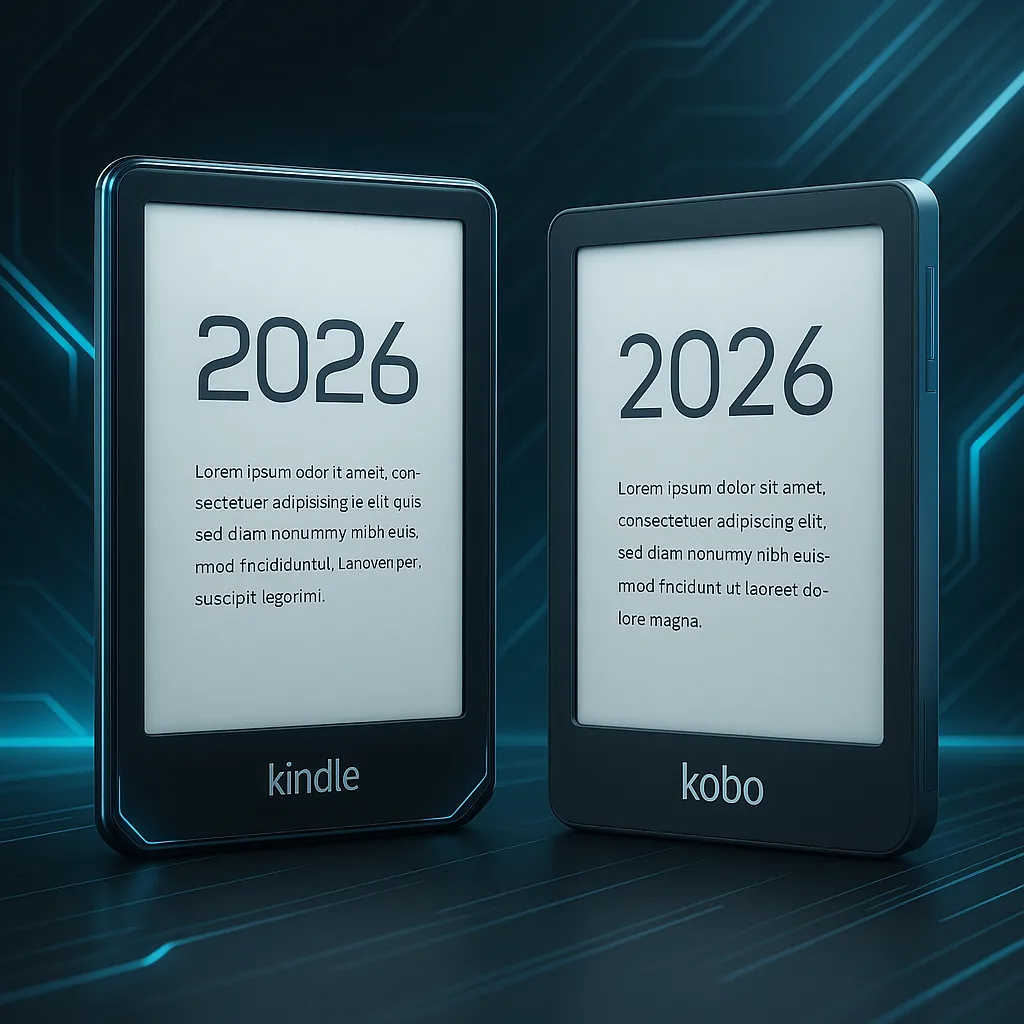
The e-reader market in 2026 continues to thrive as digital reading evolves with innovative features and improved user experience. Choosing the right e-reader can greatly enhance your reading habits, whether you're a casual reader or a literary enthusiast. In this detailed comparison, we examine two of the most popular e-readers on the market today — Amazon’s Kindle and Rakuten’s Kobo — to determine which device reigns supreme in 2026.
Design and Build Quality
Kindle Design Features
Amazon’s Kindle lineup in 2026 maintains its reputation for minimalist, sleek design combined with durable materials. Most Kindle models feature a magnesium alloy frame with a matte plastic back, offering a solid feel without excess weight. The latest Kindle Oasis, for example, weighs just 188 grams, making it one of the lightest premium e-readers available.
Size options span from the compact Kindle Paperwhite (6.8-inch screen) to the larger Oasis (7-inch screen), catering to different preferences. Ergonomics have been refined with asymmetrical button placement on the Oasis model, allowing easy page turns with one hand. The buttons are tactile and responsive, though some users prefer the touchscreen-only interface of the Paperwhite for a sleeker look.
Kobo Design Features
Kobo e-readers emphasize comfort and flexibility. The flagship Kobo Elipsa 2, for instance, features a sturdy magnesium frame paired with a soft-touch plastic back that provides excellent grip. Kobo offers a wider range of sizes, from the compact Clara 2E (6-inch) to the large Forma 2 (8-inch), appealing to readers who want a more expansive reading canvas.
Kobo’s ergonomic design often includes physical page-turn buttons on larger models, placed symmetrically on both sides, making it comfortable for both left- and right-handed readers. Weight varies by model but generally remains competitive, with the Forma 2 weighing approximately 197 grams.
Design Comparison Summary
- Comfort for Long Sessions: Kobo’s soft-touch backs and symmetric button placement often edge out Kindle for extended reading comfort.
- Portability: Kindle’s lighter Paperwhite models are easier to carry around, but Kobo’s range offers more size choices for portability needs.
- Aesthetics: Both brands showcase clean, modern designs, though Kindle leans toward minimalism while Kobo offers a slightly more utilitarian look.
Display Technology and Reading Experience
Kindle Display Specs
Kindle’s 2026 models use advanced Carta 1400 E Ink technology, delivering crisp text with a resolution up to 300 PPI (pixels per inch). The screen sizes range from 6.8 inches (Paperwhite) to 7 inches (Oasis), all offering glare-free reading.
Refresh rates have improved significantly, reducing page turn lag to near instantaneous. Front lighting is adjustable with warm color temperature controls that can shift from cool white to amber hues, reducing eye strain during night reading.
Kobo Display Specs
Kobo’s latest models also incorporate Carta 1400 E Ink screens, with sizes ranging from 6 inches (Clara 2E) to 8 inches (Forma 2). The resolution matches Kindle at 300 PPI, ensuring sharp text and images.
Kobo’s front lighting system—ComfortLight PRO—includes blue light reduction and customizable color temperature, similar to Kindle. The refresh rate and touch responsiveness have been enhanced in 2026, closing the gap in page turn speed.
Reading Experience
- Glare and Outdoor Readability: Both brands excel with anti-reflective coatings and crisp E Ink displays, making them equally suitable for bright outdoor reading.
- Touchscreen Responsiveness: Kindle’s touchscreens are slightly more responsive, but Kobo’s improvements have made the difference negligible.
- Note-Taking and Annotation: Kobo’s larger models, like the Elipsa 2, support stylus input for detailed annotation and note-taking. Kindle supports basic highlighting and notes but lacks advanced handwriting features.
Software and Ecosystem
Kindle Software Features
Kindle’s user interface is clean and intuitive, with easy navigation through library collections and settings. Integration with the Amazon Kindle Store is seamless, offering access to millions of titles, including exclusive releases and bestsellers.
Unique features such as Whispersync allow syncing of reading progress across devices, while X-Ray provides detailed insights into characters and terms within books. The vocabulary builder helps readers learn new words by storing highlighted terms and definitions.
Kobo Software Features
Kobo’s interface is similarly user-friendly with a focus on customization. The Kobo Store provides access to an extensive catalog, including a vast collection of indie and international titles. Notably, Kobo integrates OverDrive, enabling users to borrow e-books and audiobooks directly from participating libraries.
Kobo supports a wider range of file formats natively (including EPUB, PDF, MOBI) than Kindle, which primarily uses Amazon’s proprietary AZW format. This flexibility makes Kobo appealing for readers who source books from various platforms. Customizable font settings and margin adjustments enhance the reading experience.
Ecosystem and Content Availability
- Books, Magazines, and Audiobooks: Kindle excels in audiobook integration via Audible, with Bluetooth support for wireless headphones. Kobo also supports audiobooks but with a smaller catalog.
- DRM Restrictions and Borrowing: Kobo’s OverDrive integration allows easy library lending, a feature Kindle users often find limited or cumbersome.
- Cross-Device Syncing: Both brands offer apps for smartphones, tablets, and desktops, enabling reading continuity across devices.
Battery Life and Performance
Kindle Battery Performance
Kindle models typically offer weeks of battery life under average reading conditions (30 minutes/day with front light on). Charging speeds have improved with USB-C ports, allowing a full charge in about 2.5 hours.
Kobo Battery Performance
Kobo e-readers also boast similar battery longevity, with some models like the Forma 2 lasting up to six weeks on a single charge. USB-C charging is standard, and fast charging options are available on select models.
Performance and Responsiveness
- Page Turn Speed: Both devices offer smooth page turns with minimal delay, thanks to E Ink refresh rate improvements.
- Software Stability: Kindle’s frequent software updates ensure stability and feature improvements, while Kobo regularly updates its firmware, focusing on customization and library management.
Pricing and Value for Money
Kindle Pricing Overview
Amazon’s Kindle lineup in 2026 spans multiple price points. The entry-level Kindle starts at $99, the Paperwhite at $159, and the Oasis at $279. Bundled offers often include accessories like covers and charging cables, enhancing value.
Kobo Pricing Overview
Kobo’s devices are similarly priced, with the Clara 2E around $130, the Libra 2 at $179, and the Forma 2 priced near $279. Kobo bundles sometimes include styluses for note-taking models like the Elipsa 2, which is priced around $399.
Value Comparison
- Feature-to-Price Ratio: Kobo tends to offer more features such as broader file support and note-taking at a comparable or lower price point.
- Long-Term Value: Kindle’s ecosystem lock-in can limit resale but offers consistent updates; Kobo’s open format support may appeal to users valuing flexibility.
Unique Features and Innovations in 2026
Kindle Exclusive Features
In 2026, Kindle has introduced AI-powered reading assistants that summarize chapters and provide context explanations in real-time. Enhanced Whispersync now supports audiobook and e-book seamless transitions, creating a unified reading-listening experience.
Kobo Exclusive Features
Kobo has pushed innovation with AI-driven personalized reading recommendations and advanced handwriting recognition in note-taking models. Their focus on library integration and indie author support remains a strong selling point.
Future-Proofing Your Purchase
- Software Updates: Both Kindle and Kobo commit to regular updates, but Amazon’s larger developer resources may ensure longer-term support.
- Accessory Ecosystem: Kindle offers a broader range of official and third-party accessories, while Kobo’s selection is growing steadily.
User Reviews and Expert Opinions
Summary of User Feedback
- Kindle: Users praise the lightweight design, seamless Amazon integration, and audiobook features. Common complaints include limited file format support and occasional UI sluggishness.
- Kobo: Readers appreciate the flexibility with formats, comfortable ergonomics, and library lending. Some users experience slower updates and less polished software compared to Kindle.
Expert Reviews Highlights
Tech experts generally commend Kindle for its polished ecosystem and innovative AI tools, making it ideal for casual and avid readers who rely on Amazon’s vast content library. Kobo receives accolades for versatility, comfort, and suitability for readers who value open formats and extensive customization.
Final Verdict: Which E-Reader Reigns Supreme in 2026?
Both Kindle and Kobo deliver exceptional e-reading experiences in 2026, but the best choice depends on your specific needs:
- Best for Casual Readers: Kindle’s seamless Amazon integration, audiobook support, and AI enhancements make it the top pick.
- Best for Power Readers and Professionals: Kobo’s open format support, note-taking capabilities, and library lending options provide superior flexibility.
Overall, if you are already invested in the Amazon ecosystem or want the latest AI reading tools, Kindle is your go-to device. However, if you prioritize file compatibility and a more customizable reading experience, Kobo remains a strong contender.
Conclusion
Choosing between Kindle and Kobo in 2026 comes down to your reading habits and priorities. Whether you value a lightweight, AI-enhanced device or an open, versatile e-reader with excellent library integration, both brands have something to offer. For those interested in exploring or purchasing, Makeebook offers helpful guides and reviews to assist you in finding the perfect e-reader match.
Be sure to try out devices in-store if possible, and consider how each fits into your lifestyle. We invite readers to share their experiences and preferences to help build a community of informed digital readers.