Ebook Growth Trends Worldwide: Insights and Future Projections
Introduction
Overview of the Ebook Market
The ebook market has evolved dramatically over the past decade, transforming the way readers consume literature and information. From early digital texts to today’s immersive, interactive formats, ebooks have become a cornerstone of the global publishing industry. Their accessibility, portability, and adaptability have made them increasingly popular among diverse demographics, reshaping traditional reading habits and expanding the reach of authors and publishers worldwide.
Importance of Understanding Growth Trends
Understanding ebook growth trends is critical for stakeholders—including publishers, authors, educators, and technology providers—to make informed decisions. These trends reveal how consumer preferences shift, where investments are most promising, and what innovations are driving market expansion. Knowledge of these patterns helps businesses stay competitive and ensures that readers receive content tailored to their evolving needs.
Scope and Objectives of the Article
This article provides a comprehensive analysis of ebook growth trends worldwide. We will examine the current state of the global ebook market, explore the factors driving growth, highlight regional differences, discuss technological innovations, identify challenges, and present future projections. Additionally, strategic recommendations for industry players will be offered to navigate this dynamic landscape successfully.
Current State of the Global Ebook Market
Market Size and Revenue Statistics
The global ebook market has witnessed steady growth, with recent estimates valuing it at over $20 billion annually. This growth is fueled by increased digital adoption and changing consumer behaviors. While markets like North America and Europe dominate in revenue, emerging regions are rapidly catching up. According to industry reports, the ebook sector is expected to maintain a compound annual growth rate (CAGR) of around 5-7% over the next five years, underscoring its sustained relevance.
Key Regions Driving Ebook Adoption
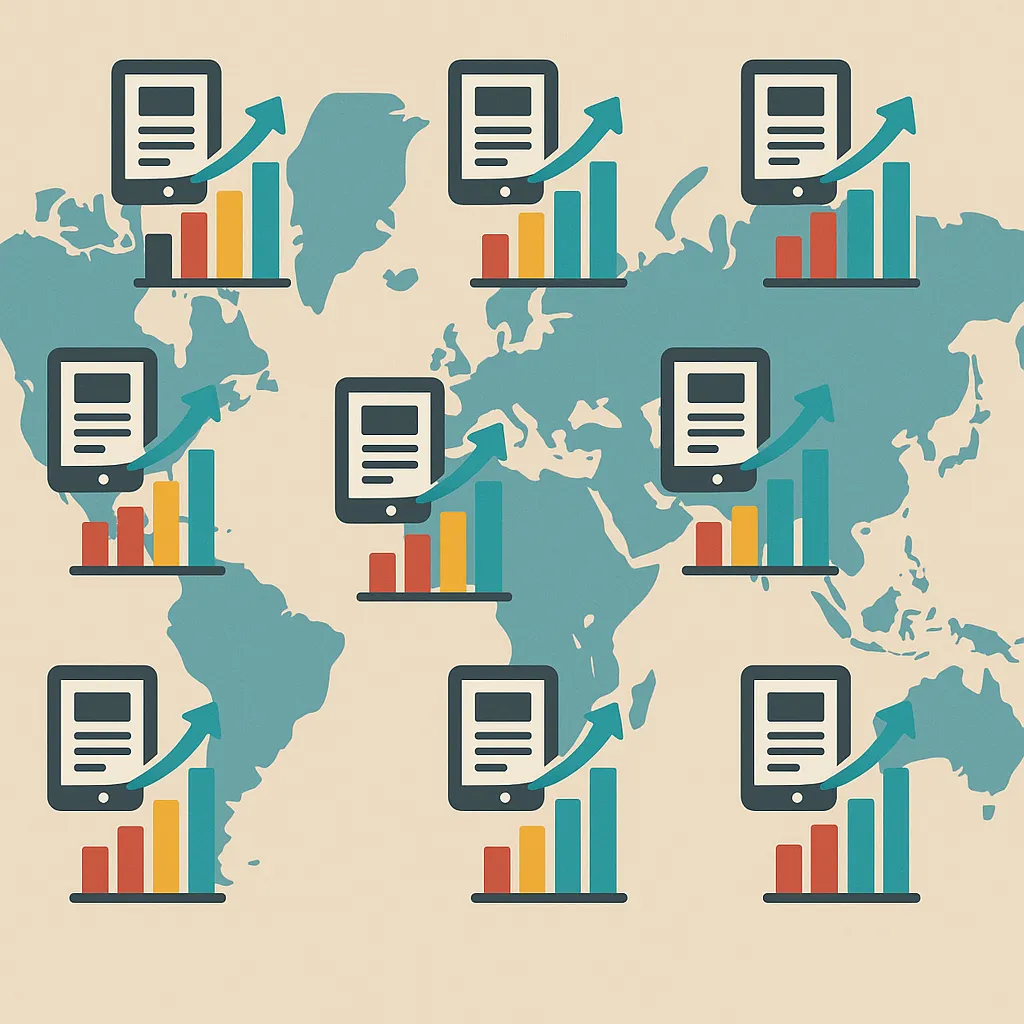
North America remains a mature and influential market, supported by high digital literacy and robust infrastructure. Europe follows closely, with countries like the UK, Germany, and Scandinavia showing significant ebook penetration. The Asia-Pacific region is currently the fastest-growing market due to burgeoning smartphone use and expanding internet access in countries like India, China, and Southeast Asia. Latin America and Africa represent emerging frontiers with growing opportunities despite infrastructural challenges.
Popular Ebook Genres and Formats
Fiction genres such as romance, mystery, and fantasy dominate ebook sales globally, appealing to a broad demographic. Non-fiction sectors like self-help, business, and educational materials also show strong performance, especially with the rise of e-learning. Format-wise, EPUB remains the industry standard, complemented by PDF and MOBI formats. Recently, enhanced ebooks integrating multimedia elements have gained traction, offering richer reader experiences.
Impact of Technology on Ebook Consumption
Technological advancements have revolutionized ebook consumption. The proliferation of smartphones, tablets, and dedicated e-readers has made ebooks more accessible than ever. Additionally, cloud storage, faster internet speeds, and cross-platform reading apps enable seamless reading experiences. Platforms like Makeebook are facilitating easier ebook creation and distribution, empowering authors and publishers to reach audiences globally with minimal barriers.
Factors Driving Ebook Growth Worldwide
Increasing Smartphone and Tablet Penetration
Smartphones and tablets have become ubiquitous worldwide, driving ebook adoption by providing convenient, portable access to digital content. As device costs decrease and availability improves, even consumers in developing regions can access ebooks, fueling market expansion.
Rising Internet Accessibility and Digital Literacy
Improved internet infrastructure and growing digital literacy rates enable more readers to download and consume ebooks. Public initiatives and private sector investments in connectivity have been particularly impactful in emerging markets, opening up new audiences for digital reading.
Advantages of Ebooks over Print Books
Ebooks offer several distinct advantages: instant delivery, space savings, adjustable fonts and backgrounds for accessibility, and often lower cost. Environmental benefits, such as reduced paper use, also contribute to their appeal. These factors combine to make ebooks an attractive alternative to traditional print media.
Influence of Educational Institutions and E-Learning
The rise of e-learning has accelerated ebook usage in education. Digital textbooks and supplementary materials are increasingly adopted by schools, universities, and corporate training programs to enhance learning efficiency. Ebooks support interactive content and updates, making them ideal for modern educational needs.
Role of Self-Publishing and Indie Authors
Self-publishing platforms have democratized content creation, allowing indie authors to publish ebooks without traditional gatekeepers. This has expanded the volume and diversity of available titles, attracting niche audiences and fostering innovation in content and marketing strategies.
Regional Insights and Market Variations
North America: Mature Market and Trends
North America leads with a sophisticated ebook ecosystem supported by major retailers like Amazon and Apple Books. Readers here favor a mix of genres, with a notable rise in subscription models and audiobooks complementing ebooks. The market is characterized by high competition and continual innovation.
Europe: Diverse Language Markets and Preferences
Europe's ebook market is fragmented due to linguistic and cultural diversity. Countries like the UK and Germany show strong adoption, while others are still developing digital reading habits. Multilingual content and localized marketing play crucial roles in this region’s ebook growth.
Asia-Pacific: Rapid Growth and Emerging Markets
The Asia-Pacific region is experiencing explosive growth in ebook consumption, driven by expanding middle classes, digital infrastructure, and smartphone penetration. Countries such as China, India, and Indonesia are investing heavily in digital publishing, with local authors and platforms gaining prominence.
Latin America and Africa: Opportunities and Challenges
Both Latin America and Africa represent promising yet challenging markets. While increasing internet access and smartphone use create opportunities, issues like limited payment infrastructure, piracy, and lower digital literacy slow growth. However, targeted strategies and partnerships are beginning to unlock these markets’ potential.
Technological Innovations Shaping the Ebook Industry
Enhanced Ebook Formats (Interactive and Multimedia Ebooks)
Next-generation ebooks include interactive elements such as videos, quizzes, animations, and hyperlinks. These features enrich user engagement, particularly in educational and children’s content, and distinguish ebooks from static print formats.
Integration with Audiobooks and Cross-Platform Reading
Many platforms now offer integrated experiences where users can switch seamlessly between reading and listening. This hybrid approach caters to varied preferences and increases content accessibility, expanding the ebook audience.
AI and Personalization in Ebook Recommendations
Artificial intelligence powers personalized ebook recommendations based on reading habits and preferences, improving user satisfaction and driving sales. AI also assists authors and publishers with content creation, marketing analytics, and audience targeting.
Blockchain and Copyright Protection
Blockchain technology is being explored to enhance copyright protection and royalty tracking in ebook publishing. By providing transparent and immutable records, blockchain can help combat piracy and ensure fair compensation for creators.
Challenges Facing the Ebook Market
Competition from Print and Audiobooks
Despite growth, ebooks compete with print books and the rising popularity of audiobooks. Readers’ tactile preferences and the immersive nature of audiobooks can limit ebook adoption in certain demographics.
Digital Rights Management (DRM) Issues
DRM restrictions can frustrate consumers by limiting device compatibility and sharing options. Balancing piracy prevention with user convenience remains a delicate challenge for the industry.
Market Saturation and Content Quality Concerns
The influx of self-published ebooks has led to market saturation, making it harder for quality content to stand out. This flood of titles can overwhelm readers and dilute overall market reputation.
Accessibility and Inclusivity Barriers
Not all ebooks are optimized for readers with disabilities, such as visual impairments. Ensuring ebooks meet accessibility standards is essential to serve diverse audiences and comply with regulatory frameworks.
Future Projections and Trends
Market Growth Forecasts (Next 5-10 Years)
Analysts predict continued ebook market growth at a steady pace, driven by technology adoption and emerging markets. The global market is expected to exceed $30 billion within the next decade, with Asia-Pacific leading expansion rates.
Emerging Consumer Preferences and Behaviors
Consumers are increasingly favoring personalized, interactive content and flexible reading formats. Subscription services and bundled media packages are likely to gain traction, offering better value and convenience.
Potential Impact of New Technologies (AR/VR, AI)
Augmented reality (AR) and virtual reality (VR) have potential to revolutionize ebooks by offering immersive storytelling and experiential learning. AI advancements will further refine content personalization and streamline production workflows.
Ebooks in Education and Corporate Training
The education sector will continue to embrace ebooks for their adaptability and cost-effectiveness. Corporate training programs will expand digital content use to facilitate remote learning and skill development, driving demand for specialized ebooks.
Sustainability and Environmental Considerations
With growing environmental awareness, ebooks are positioned as a sustainable alternative to print, reducing paper consumption and carbon footprints. This ecological advantage will resonate with environmentally conscious consumers and organizations.
Strategic Recommendations for Stakeholders
Publishers and Authors: Adapting to Digital Trends
Publishers and authors should embrace digital-first strategies, leveraging platforms like Makeebook to streamline ebook creation and distribution. Focusing on quality, interactivity, and targeted marketing can help them stand out in a crowded market.
Technology Providers: Innovation Opportunities
Technology companies should invest in developing tools that enhance ebook experiences, such as AI-driven personalization, improved DRM solutions, and multimedia integration. Collaborations with publishers can accelerate innovation and adoption.
Marketers: Targeting Global and Niche Audiences
Marketers need to utilize data analytics to identify niche segments and tailor campaigns accordingly. Multilingual content and culturally relevant messaging are key for penetrating diverse regional markets effectively.
Educators and Institutions: Leveraging Ebooks for Learning
Educational entities should incorporate ebooks into curricula and training programs to facilitate flexible, engaging learning environments. Partnering with publishers to develop interactive and accessible content will maximize educational outcomes.
Conclusion
Summary of Key Insights
The global ebook market is experiencing robust growth driven by technological advancements, increasing digital access, and shifting consumer preferences. Regional differences highlight unique opportunities and challenges, while innovations continue to reshape how ebooks are created and consumed.
The Future Outlook of the Ebook Industry
Looking ahead, ebooks will maintain their integral role in publishing, education, and entertainment. Emerging technologies like AI, AR, and blockchain promise to enhance user experiences and industry transparency, fostering sustained growth and innovation.
Final Thoughts on Embracing Ebook Growth Worldwide
For stakeholders to fully benefit from the ebook revolution, embracing digital transformation and focusing on quality, accessibility, and personalization are essential. With tools like Makeebook simplifying production and distribution, the future of ebooks worldwide looks promising and inclusive.
References and Further Reading
- International Digital Publishing Forum (IDPF) Reports
- Statista: Ebook Market Statistics
- Global Industry Analysts: Ebook Market Forecasts
- Publishing Technology News and Insights
- Educational Technology Journals on E-Learning Trends